Beginner guides
How to Start Meditating at Home: A Beginner’s Step-by-Step Guide
Start with a chair, a few minutes and a clear exercise. Learn what to do with distractions and build a first-week routine that fits an ordinary home.
By My Inner Day · · 9 min read
Begin with something you can actually repeat
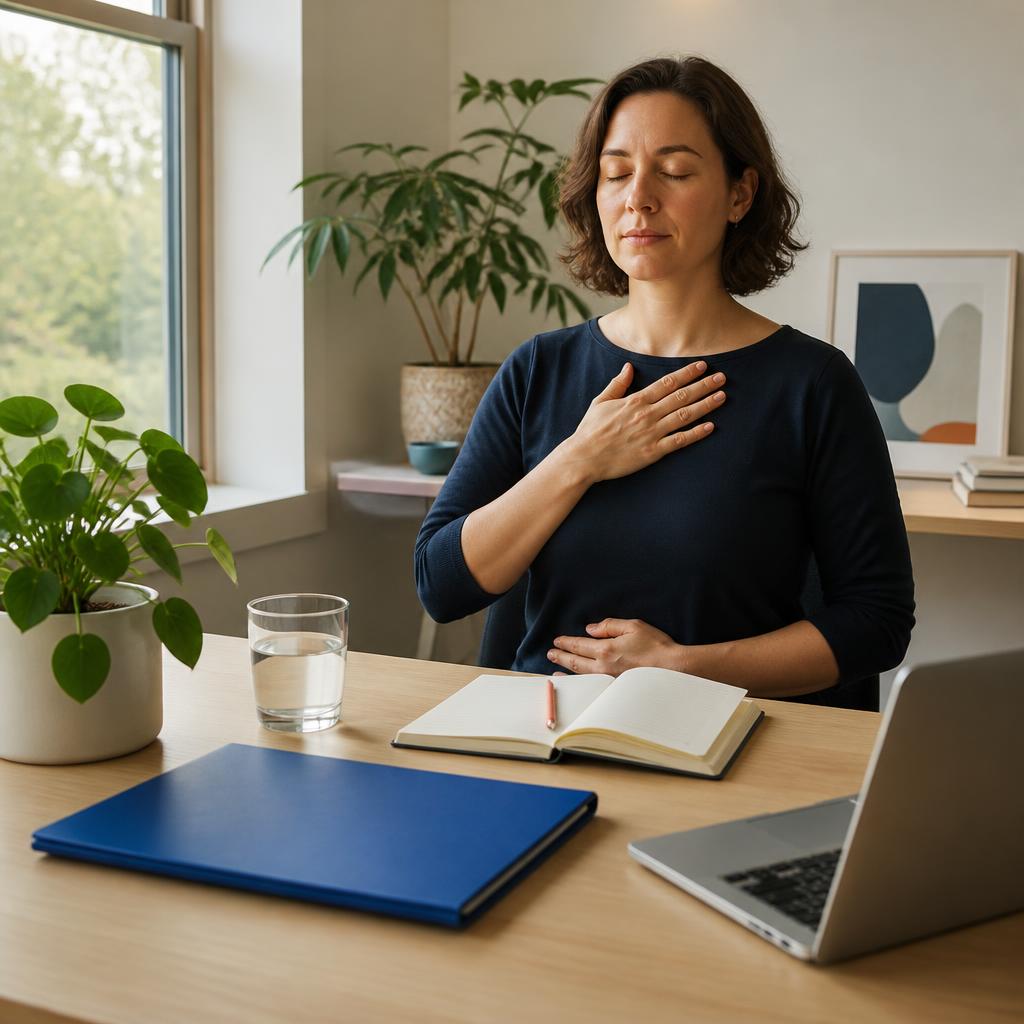
Learning how to start meditating at home does not require a silent house, a special cushion, or a personality transplant. It begins with a small, specific appointment: a few minutes in a place where you can sit reasonably comfortably and give your attention one simple job. This guide offers an ordinary starting point, not a test of how peaceful you can become.
Perhaps you have already tried an audio session and spent most of it planning dinner. Perhaps you keep postponing because the room is untidy or your mornings are unpredictable. Both situations leave room for practice. Your first useful goal is to finish a short session and understand what you did, rather than produce a particular feeling on demand.
The routine below uses a chair, a gentle timer, and an attention anchor you choose yourself. Read it once before beginning so you do not need to keep checking a screen. You can also keep your eyes open throughout. Make the exercise easier to start than the collection of reasons you normally give yourself for delaying it.
Decide what this first week is for
Write a plain sentence about why you want to try meditation. Something like “I want a brief pause between work and the rest of my evening” gives you a more usable direction than “I must become a calm person.” A small intention helps you decide when to practise and whether the routine fits your actual life.
Keep that intention separate from a promised result. You may finish a session feeling settled, distracted, bored, or much as you did before. None of those outcomes alone tells you whether meditation will become useful to you. For your first week, evaluate practical questions: Was the duration manageable? Did you understand the instructions? Can you imagine doing this again?
The National Center for Complementary and Integrative Health describes meditation research as varied and sometimes preliminary. Avoid treating a beginner routine as a guaranteed treatment or a replacement for healthcare. Here, the purpose is more modest: an opportunity to practise paying attention in a way you can explore for yourself.
Choose a place without turning it into a project
Use an existing spot before buying equipment. A dining chair, a corner of the sofa with support, or a bench can work. Choose somewhere safe where you will not need to monitor traffic, cooking, or machinery. If you are responsible for a child or someone needing care, remain available to them; the session can stop whenever necessary.
Aim for fewer interruptions, not perfect silence. Tell a housemate you are taking a short pause if that is helpful. Put the television off, silence non-essential notifications, and leave necessary calls available. Headphones are optional. If wearing them makes you less comfortable or prevents you hearing something important, leave them aside.
A visual cue can be very ordinary: the chair you already use beside a window or a folded blanket placed on its seat. Avoid creating a setup that takes longer than the meditation. The best home practice space is one you can use on a normal Tuesday, including when there are dishes waiting in the kitchen.
Find a supported position and choose an anchor
Sit in a way that feels supported, with your feet on the floor or another comfortable surface. Rest your hands wherever they can stay without effort. There is no need to hold your spine rigid or adopt a cross-legged pose. Adjust your position when something hurts; discomfort is not a requirement you must endure to make the session count.
Choose one simple anchor for attention. It might be the feeling of your feet meeting the floor, an ordinary sound in the room, or the movement of your natural breathing. If attention to breathing feels uncomfortable, use feet or sounds instead. You do not need to make your breath deeper, slower, or more impressive.
Try the anchor for a few moments before starting your timer. Ask whether it gives you something straightforward to notice. You are choosing a place to return attention, not selecting the one correct technique for the rest of your life. For this session, simplicity matters more than finding a method that sounds advanced.
Your first five-minute home practice
Set a gentle timer for five minutes, or choose two minutes if five feels impractical. During the opening moments, notice the support beneath you and look around the room. Let your eyes remain softly open or close them if that feels comfortable. There is no special state you must reach before the practice begins.
Bring attention to your chosen anchor. For a feet-based practice, notice contact with socks, shoes, or the floor. For sound, hear what is already there without searching for something beautiful. For breathing, notice one ordinary inhale and exhale without controlling them. Allow the experience to be plain and unremarkable.
When you realise your attention has moved into a story, a task, or a memory, return to the anchor. You do not need to finish the thought first. You also do not need to criticise yourself for having it. The return can be small: feeling your feet again for a moment is enough to resume the exercise.
When the timer ends, look around and move your hands or shoulders. Notice one detail of the room before standing. Then continue with your day. A clear ending helps keep a short practice short; you do not have to remain seated until you feel transformed or until every thought has disappeared.
What to do when the house interrupts you
An interruption does not require starting the entire session again. If the doorbell rings, respond and decide whether you want to return for the remaining time. If a child needs you, attend to them. Treat these decisions as part of practising at home, where life continues around the activity rather than politely waiting outside it.
For background sounds that do not need action, try noticing them briefly and returning to your anchor. You might hear a dog, footsteps, or an appliance. There is no need to force yourself to enjoy a sound you dislike. The useful question is whether it requires a response now, rather than whether it should have happened.
If interruptions repeatedly make a particular time unworkable, change the arrangement. A two-minute pause after lunch may fit better than ten minutes before everyone leaves the house. Solving a scheduling problem is often more useful than trying to become better at tolerating a predictably impossible schedule.

A first-week plan with room to adjust
On days one and two, keep the session short and use the same location if possible. Learn where the timer lives and decide which anchor is easiest to follow. Write one brief note afterwards, such as “chair comfortable; phone distracting.” You are collecting practical information, not grading your inner experience.
On days three and four, repeat the routine without adding extra goals. If you spent the first sessions changing methods, choose one for these two days. Familiar instructions reduce the number of decisions you need to make. If you miss a day, simply use the next available opportunity; there is no catch-up session to repay.
On days five and six, change one detail if needed: the time, the seat, or the duration. Keep the other parts familiar so you can tell whether that adjustment helps. Do not automatically increase the length because the week is moving forward. A session that fits remains a reasonable choice.
On day seven, look back at the notes. Choose what to keep for the following week and remove one obstacle. Perhaps leaving headphones beside the chair would help, or perhaps silence suits you better than audio. The outcome is a workable routine you understand, not a certificate that you have mastered meditation.
Guided or silent: choose less friction
A guided session supplies the reminders, so you do not need to remember each stage yourself. Before choosing one, check its length and whether the description matches what you want to practise. A clearly explained beginner session may be more useful than an elaborate title promising extraordinary results. It is fine to stop an audio you do not find helpful.
A silent session lets you keep the instructions very simple: settle, notice your anchor, return, finish. It can be useful when you want less screen involvement or when voices feel distracting. You do not have to progress from guided to silent practice as though one were a higher qualification. They are different formats you can use at different times.
If you use an app, select the session before your planned start whenever possible. Otherwise, choosing a practice can become ten minutes of browsing. For this first week, repeating a familiar exercise is a reasonable experiment. You can explore a wider library after you know what makes a session easy to begin.
Troubleshoot the problems that actually appear
If you feel sleepy, consider sitting more upright or choosing a different time. If your knees or back hurt, change your support or position. If you keep checking the clock, try a shorter duration with a reliable timer. These are practical adjustments; none requires an argument about whether you possess enough discipline.
If your thoughts seem especially busy, make the task narrower. Feel the contact of one foot for a moment, or listen for one ordinary sound. Then continue. A useful session can contain many distractions. You do not need to keep a count, and a crowded mind does not obligate you to extend the practice until it becomes quiet.
If the exercise becomes distressing, stop and orient to the room. You can choose another activity and seek appropriate support when needed. There is no requirement to push through an experience simply because it is labelled meditation. Comfort, choice, and a realistic routine are more useful starting conditions than endurance.
Bring one small part into the rest of the day
After a seated session, choose one everyday transition where you could briefly notice what you are doing. It might be putting down your work bag, opening the front door, or sitting at the dinner table. This is not another task to track all day. It is an optional way to connect the practice with a moment that already exists.
For example, before opening your laptop after lunch, feel the chair supporting you and notice what task you intend to begin. Then open the laptop and work. You do not have to move slowly, become solemn, or turn every action into an exercise. The pause should serve the day rather than consume it.
If that extra step feels like too much, leave it out. A modest home practice can remain modest. You are allowed to learn one thing at a time, repeat a basic session, and decide later whether you want a longer routine or more guidance. Beginning is enough work for the beginning.
Questions about meditating at home
Can I meditate on a chair? Yes. Choose support that works for your body; a floor cushion is optional. Can I keep my eyes open? Yes. A relaxed gaze at an ordinary point in the room is a practical option. Neither choice makes the practice less legitimate.
How long should a beginner meditate? Start with a duration you can comfortably try, such as two to five minutes, and review it after several sessions. This is a suggested starting point, not a scientifically required dose. There is no need to increase it if the current length suits your routine.
Do I need to feel calm afterwards? No. For this first week, measure whether you understood the exercise and made space to try it. If you want your next steps laid out, a short guided programme can provide structure while leaving the length and timing of your practice flexible.
Sources and further reading
These articles offer general educational information. Exercises and sample schedules are editorial suggestions, not clinical protocols. The linked resources provide background and do not endorse My Inner Day.