Stress support
Meditation for Work Stress: Simple Pauses for a Busy Day
Try a simple desk-based pause and clearer transitions around email, meetings and the end of work—while keeping practical support for the causes of stress in view.
By My Inner Day · · Updated · 6 min read
Where meditation fits into a stressful workday
Meditation for work stress is best approached as an optional pause with a clear purpose. It will not change a deadline, repair a staffing shortage, or make an unreasonable request reasonable. What you can choose is a brief interval in which to notice where your attention is and decide what action comes next.
This guide offers a simple desk-based practice and several ways to place it around meetings or the end of a shift. The examples are suggestions to adapt, not a treatment programme. Use them only when you can safely pause; driving, operating equipment, and tasks requiring continuous attention need your full awareness.
Start by identifying the pressure
Ask whether the immediate problem is a task, an interaction, an environment, or a concern about your health. A crowded inbox may need prioritising. A difficult conversation may need preparation. An unsafe situation requires an appropriate response. Naming the issue helps you avoid expecting a meditation recording to do work it cannot do.
The NHS work-related stress guidance discusses both practical changes and seeking support. If stress is affecting daily life or mental health, consider speaking with a healthcare professional or an appropriate workplace support service. You do not need to wait until a self-help routine has failed before having that conversation.
A three-minute pause at your desk
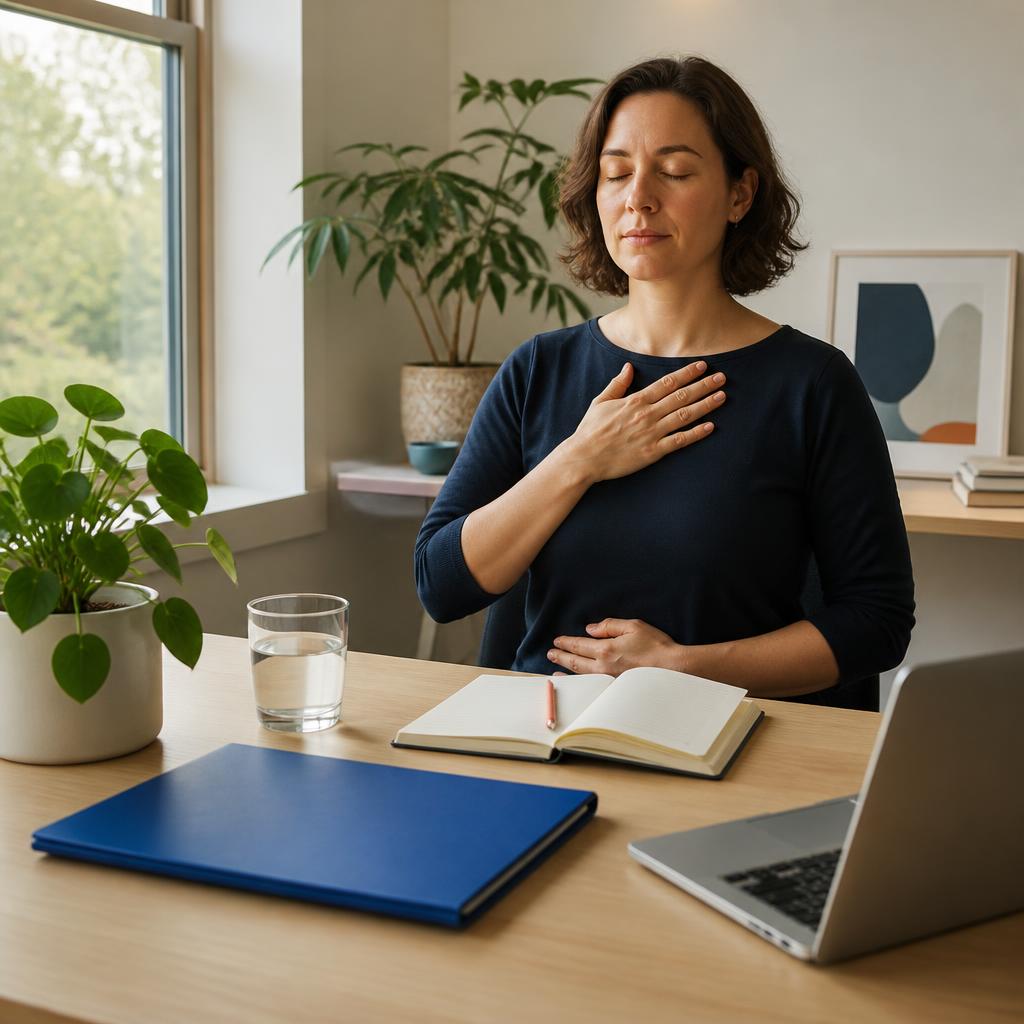
First, stop the task if it is safe to do so. Let your hands rest, feel your feet on the floor, and look away from the screen. Keep your eyes open if you prefer. Notice the chair supporting you without trying to adopt a rigid posture or look as though you are performing meditation.
Next, choose a simple anchor such as the contact of your hands or an ordinary sound. When you notice planning or replaying a conversation, return to the anchor. Leave breathing natural. If focusing inward feels uncomfortable, look around and notice the ordinary features of the room instead.
Finally, choose one next action. It might be opening a document, asking a clarifying question, or taking the break you have scheduled. The action does not need to be impressive. End the pause and do that one thing rather than using the remaining moment to redesign the entire working day.
Before opening email
If mornings begin with an immediate rush into messages, decide whether a short pause would fit before that step. Prepare the guide or timer in advance. Notice how you are sitting, identify the first task you intend to address, and then begin. There is no requirement to clear your mind or feel enthusiastic first.
Pair the pause with a practical boundary if appropriate to your role. For example, you might decide to read a message fully before answering or check your priority list before accepting another task. The meditation does not enforce that boundary for you; it can simply be a moment in which you remember the choice.
Between meetings
A transition can be as short as standing, looking away from a screen, and noticing your surroundings before the next call. If you have a little more time, use the three-minute practice. Do not squeeze it in at the cost of an essential break or arrive late because you felt obliged to finish an audio.
If a previous conversation keeps replaying, distinguish between a useful follow-up and rehearsal. Write a brief action note if one is needed. Then choose whether to set the matter aside until the appropriate time. If it needs immediate attention, address it; pausing is a tool for making a decision, not avoiding one.
When you work from home
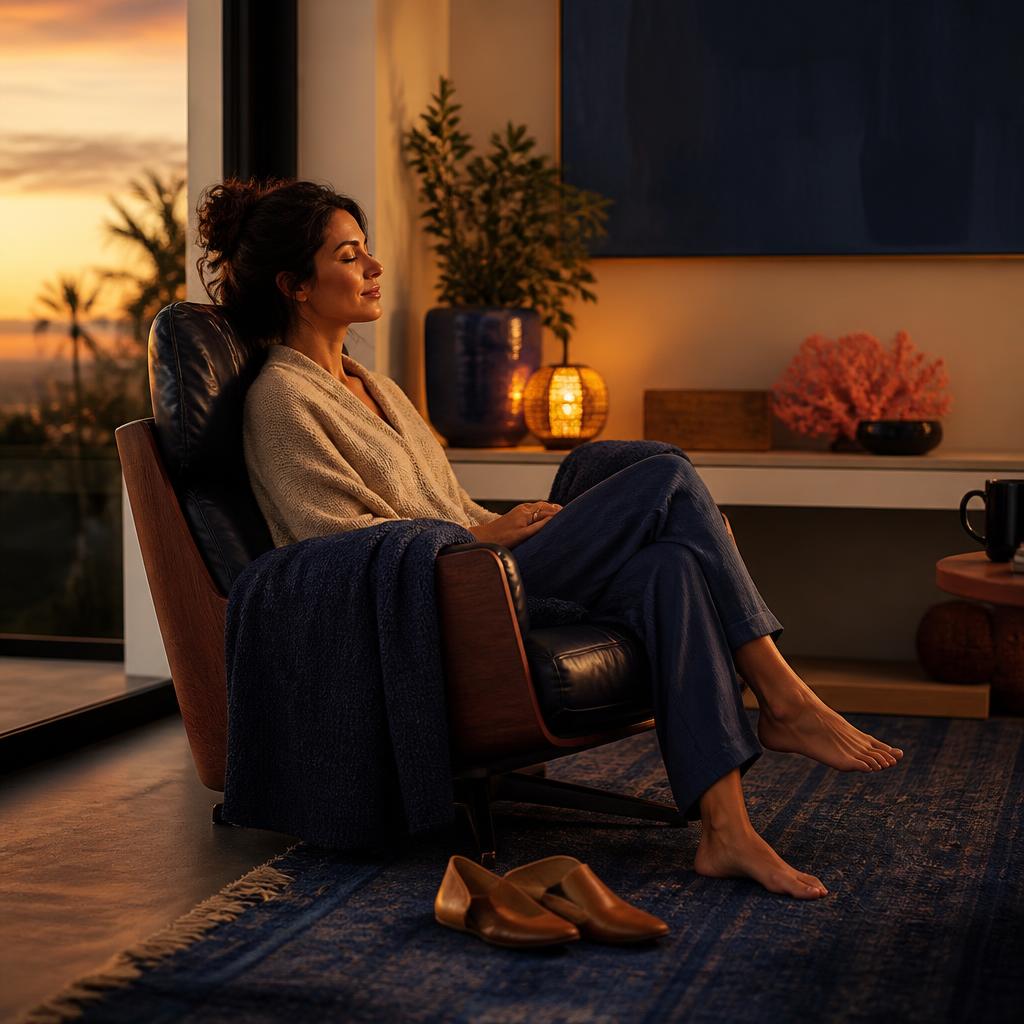
A home workspace can blur the boundary between work and the rest of the day. Choose a visible transition that does not require changing your whole environment: close the laptop, move to another chair, or put work notes away. A short seated pause can be one part of that transition if you find it useful.
Keep care responsibilities and household needs in view. If a child or another person needs help, respond. A routine that depends on uninterrupted silence may be unrealistic. You can use an eyes-open pause, choose a different time, or leave the practice for another day without creating a backlog to repay.
At the end of a shift
Before leaving, note the next necessary work action in the place you normally keep tasks. Then use a brief pause to orient to the transition out of work. Notice support, look around, and identify what you are doing next. It may be travelling home, preparing food, or spending time with family.
Avoid demanding that every work thought disappear before you leave. Some concerns may remain. You can recognise them without turning the entire journey home into a rehearsal, and you can still seek support for problems that need more than a transition routine. Never use an absorbing meditation while driving.
Keep the workplace routine voluntary
A practice should allow people to choose their posture, keep their eyes open, or opt out. Not everyone wants to meditate at work, and a wellbeing activity should not require sharing personal feelings with colleagues. If you are organising a group pause, explain the format plainly and offer a straightforward alternative.
Do not use attendance, streaks, or apparent calm as a measure of commitment to work. Meditation is not evidence that someone can take on more pressure, and declining it does not show a poor attitude. The useful question is whether the optional practice is helpful to the person choosing it.
Review what is actually helping
After several attempts, ask whether the pause fits the schedule and makes the next step clearer. If choosing an audio takes too long, use one familiar recording or a silent timer. If the desk is uncomfortable, move when possible. If the timing always conflicts with a meeting, choose another cue.
Also review the work problem itself. Have priorities become clearer? Is a request for help still needed? A pleasant pause should not conceal an unresolved issue. Keep the practice small enough that you still have time and attention for the practical action that matters.
Common questions
Do I need a quiet room?
Not necessarily. A supported seat and an eyes-open exercise can be enough for a short pause when it is safe. Choose a different location if the environment makes concentration or comfort difficult.
Can meditation prevent burnout?
This article makes no such promise. Ongoing pressure may require changes to workload, support, working conditions, or healthcare. A brief wellbeing exercise cannot replace those responses.
What if I only have one minute?
Notice your surroundings, feel your feet, and choose your next action. You do not have to fit a complete guided session into every gap. Use the time honestly and return to the longer routine when it suits you.
Sources and further reading
These articles offer general educational information. Exercises and sample schedules are editorial suggestions, not clinical protocols. The linked resources provide background and do not endorse My Inner Day.